
India Today Travel Plus.
On driving across a drive-in beach.
When I first read about the Muzhappilangad drive-in beach, I wondered what exactly ‘drive in’ meant. Did it refer to a road plying parallel to the sea, an incursion onto the beach from a road and back, or something else altogether?
As I drove south of Kannur in North Kerala to find out, there was no sign of the sea. As I took a 3-odd km detour off National Highway 17, a dead-end appeared ahead beside a sandy clearing washed up by sea waves. A passer-by told me the Muzhappilangad drive-in beach started in the clearing, and that the ‘drive-in’ referred, astonishingly, to a 4-km stretch of sand across the expanse of which I could drive.
I steered my car onto the sand, wary of the waves, hesitant to drive amid what wasn’t quite terra firma. As my tyres slipped ahead on the wet sand at 10kmph, glassy clear waters lapped at my wheels.
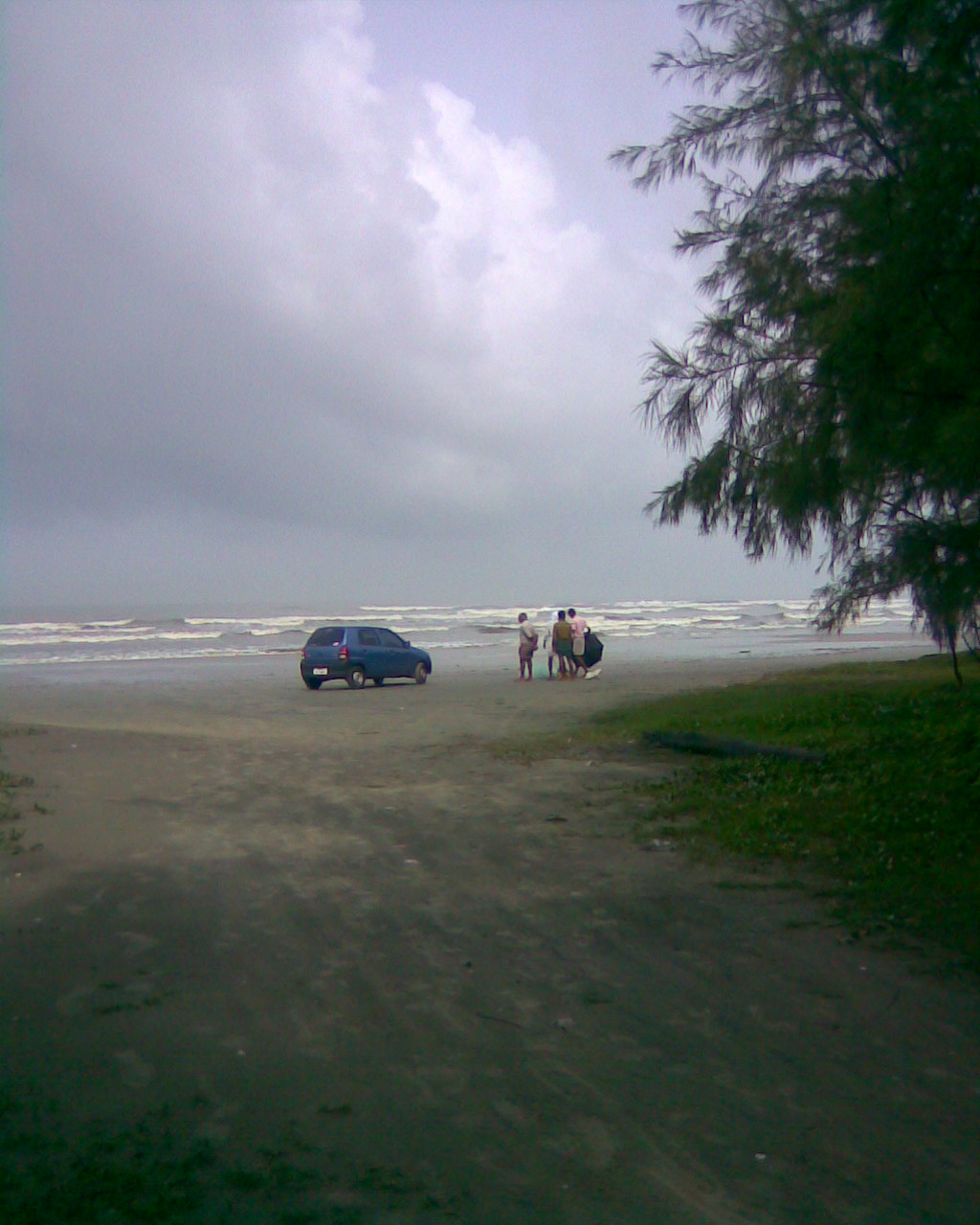
Spotless sands stretched ahead. There wasn’t a vehicle or person anywhere on the sands. A pair of wooden football goalposts stood on the golden vastness, sans players. Behind coconut trees off the sand, a solitary house with a resort-sign looked uninhabited. The abandoned-looking building of the Muzhappilangad tourism authority was flanked by shrubbery that didn’t look trimmed in ages.
An enormous wave lashed out, its spray fully drenching my car, leaving me relieved in the cocooned, dry safety of the interior, glad that the windows were protectively rolled up. Sometimes I’d plough through 2-3 feet deep water. Sometimes I’d slice the thin clear-glass surface of a weak wave. Sometimes my tyres would crunch seashells underneath.
Soon, the sandy stretch ended in a clump of coconut trees ahead, signaling the end of the 4km beach. From the hard, dry, sturdy asphalt road I wistfully looked back at the sea, already missing Muzhappilangad’s walking-on-water experience.
[Images from Muzhappilangad here.]
